
What Is an ESD Shielding Bag?
ESD shielding bags protect electronics from static discharge. How Faraday shielding works, surface resistance ranges, and when a shielding bag is required.
PSF Packaging Engineering · Published November 1, 2026 · Updated November 20, 2026 · 3 min read
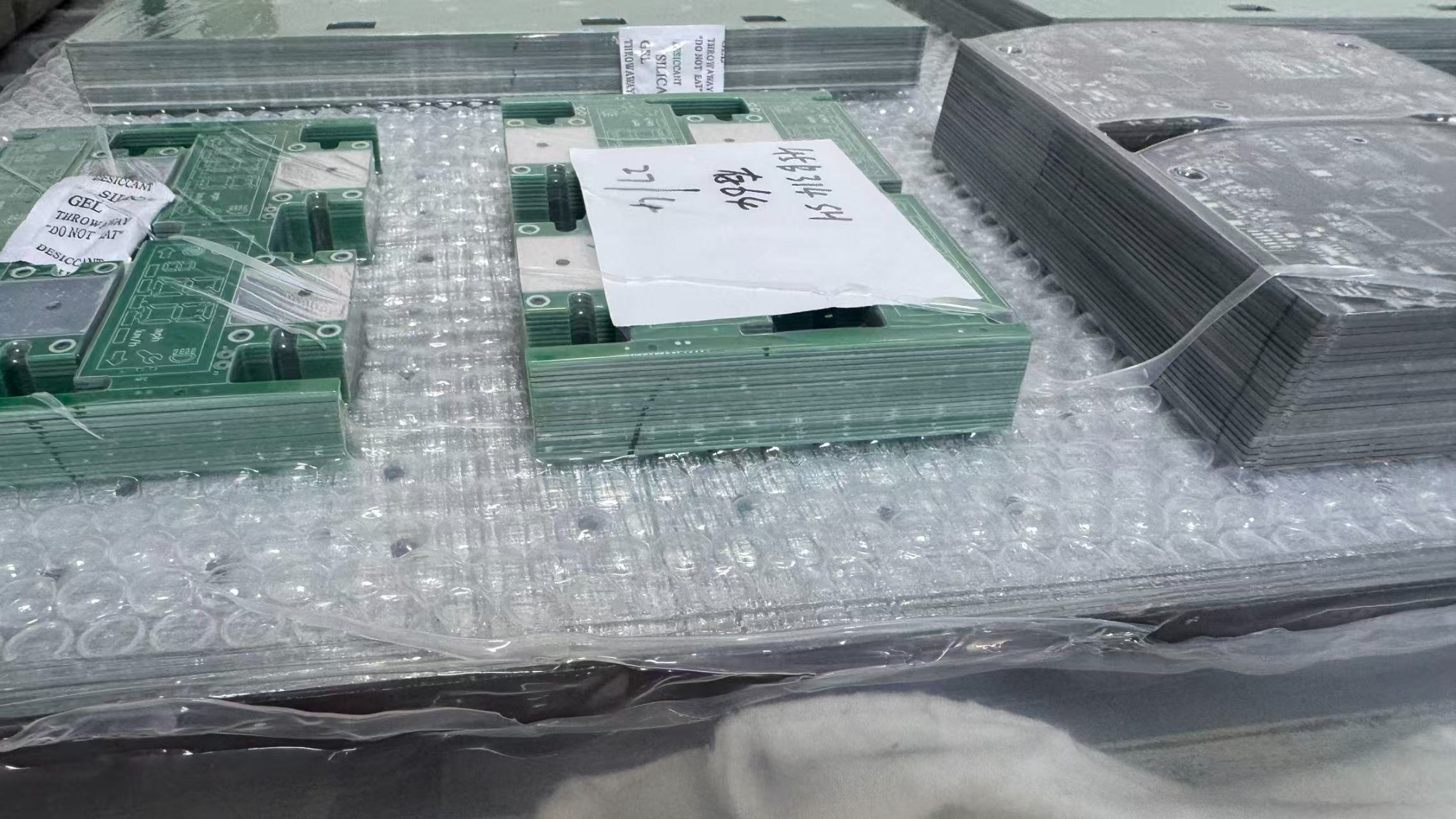
An ESD shielding bag is a multi-layer metallised package that forms a Faraday cage around its contents, diverting electrostatic discharge around the enclosed component rather than through it. PSF Packaging produces shielding bags with surface resistance in the 10⁶–10¹¹ Ω range for PCBs, semiconductor devices and electronic assemblies, with lead times of 7–15 working days.
Key points
- A shielding bag does more than dissipate charge — it blocks the discharge current path through the component.
- Surface resistance of 10⁶–10¹¹ Ω is the working range for dissipative shielding structures.
- A bag that is only antistatic does not provide shielding and must not be substituted.
- Shielding performance degrades with pinholes, creases and seal failure — inspection matters as much as material.
Definition
An ESD shielding bag is a package engineered to protect electrostatic-sensitive devices (ESDs) from discharge during handling and transport. It is not simply a plastic bag with an additive: it is a laminate in which at least one layer is conductive or dissipative, typically a metallised film, sandwiched between insulating layers.
The conductive layer creates a Faraday cage. When an external charge arrives, current flows around the outside of the bag and through the sealed conductive path, not through the device inside. This is the functional difference from a plain antistatic bag, which only reduces charge generation on its own surface.
The four functions, separated
| Function | What it does | Why buyers confuse them |
|---|---|---|
| Antistatic | Prevents the bag surface from generating charge | Often assumed to mean shielding — it does not |
| Dissipative | Allows charge to bleed away at a controlled rate | Rate is material-dependent and humidity-sensitive |
| Shielding | Diverts discharge current around the contents | Requires a conductive layer and a continuous seal |
| Moisture barrier | Limits water vapour ingress | Separate structure; not all shielding bags include it |
A bag can be antistatic and dissipative without being shielding. For a bare PCB or semiconductor device leaving the factory, specify shielding explicitly.
Selection by application
| Application | Recommended structure | Reason |
|---|---|---|
| Bare PCB assembly | Metallised shielding bag with moisture barrier | Protects against both discharge and humidity during reflow |
| Semiconductor devices | Shielding bag, sealed, with humidity indicator | Devices are sensitive to both discharge and moisture |
| Electronic accessories | Dissipative pink or black bag | Lower cost where the device is less sensitive |
| Long-term storage | Shielding bag with desiccant and indicator card | Extended exposure to ambient humidity |
Where shielding fails
Shielding is a system property, not a material property alone. A high-performance film assembled with a poor seal or a pinhole no longer forms a continuous cage. Creasing the metallised layer can break the conductive path. Board edges can puncture thin film during transport.
PSF inspects every production lot for seal integrity and visual defects, and ships with a 99.9%+ passed-inspection rate. Buyers should still open a sample bag and inspect the seal before committing to a production order.
Boundary: when a shielding bag is the wrong choice
Shielding bags are not a moisture-barrier solution unless the structure explicitly includes one, and they are not a physical-protection solution for heavy or sharp components. A metal bracket with burrs will puncture any film bag — use a EPE-laminated or bubble structure instead. If the device is being moved only within a grounded ESD workstation, a cheaper dissipative bag may be sufficient.
For a worked comparison of bag types by component and shipping route, see the ESD bag selection guide. For rust-sensitive metal parts, the VCI rust preventive bag page covers the different failure mode.
This article describes general practice in flexible packaging. It is not a substitute for a specification review of your product — film structure, functional values and compliance depend on the contents, the packing line and the destination market.